If you want to understand why James Bond still matters to men’s style, you have to go right back to the beginning.
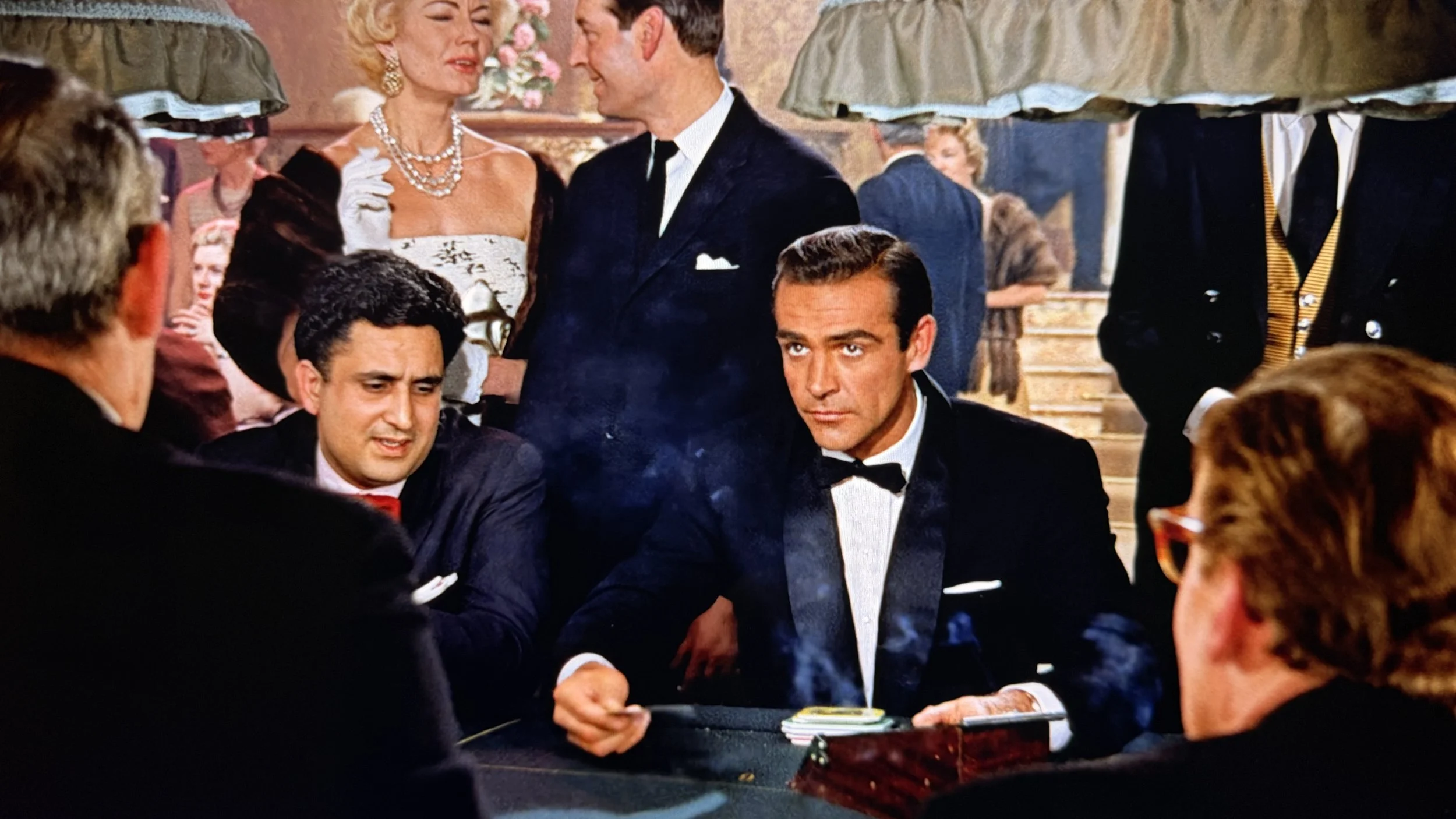
Before the Aston Martin, before “vodka martini, shaken not stirred” became a catchphrase, before Q Branch and all the gadgets and the endless arguments over who the best Bond is, there was a man sitting at a card table in a London casino. He’s dressed in a midnight blue dinner suit, casually smoking a cigarette, winning a hand against a glamorous lady who thinks she’s in control of the room.
We don’t even see his face straight away. The camera gives us the back of his head, then his hands, his cigarette case, his lighter, and those extraordinary satin turnback cuffs. The clothes introduce him before Sean Connery says a single word. Sylvia Trench asks his name. He lights the cigarette, looks directly at her and finally gives us the line that’s going to follow him for more than sixty years.
“Bond. James Bond.”
It’s one of the most confident character introductions in cinema. But what interests me most as a bespoke tailor is that the confidence isn’t coming from the dialogue alone. The dinner suit, the setting, the way Connery wears his clothes and the complete absence of fuss are all doing a huge amount of heavy lifting.
This isn’t a man who has dressed up because he’s been invited somewhere fancy. This is a man who looks like he belongs in that room, knows the rules better than everyone else and could leave at any moment without feeling he was missing out.
That’s where Bond style really begins.
The First Bond Formula
Dr. No was released in 1962, and the remarkable thing is that the people making it had no idea they were creating the visual template for a series that would still be with us more than sixty years later.
Almost every sartorial idea we now associate with Bond is either established here or can be traced back to choices made in this first film. The dinner suit, restrained British tailoring, white and pale blue shirts and dark ties. Carefully chosen casual clothes. Most importantly, the idea that Bond’s clothes should be exceptional without ever looking as though he has spent the morning trying to impress anyone.
That last point matters because it’s still one of the hardest things to get right in menswear. A lot of men can buy expensive clothes, but few can wear them in a way that feels (and looks) completely natural.
Sean Connery wasn’t the obvious casting choice either. He had the physical presence, of course, but the challenge was making him believable in the world of Mayfair casinos, private clubs and polished social etiquette. They didn’t need to remove the potential danger that Connery’s physical presence suggested, they just needed to make it the right amount of civilised.
This is where director Terence Young becomes one of the most important figures in Bond style. He understood that world from the inside and helped shape Connery into the Bond we recognise. The often repeated story that Connery was told to sleep in his suits may or may not be true, but it illustrates the point beautifully. He doesn’t handle the clothes like delicate costume. He sits in them, moves in them, fights in them and makes them look like he’s wearing them rather than the other way round.
That’s one of the first things I notice whenever I revisit Sean Connery’s Bond. The clothes are beautifully made, but he isn’t precious about them. A proper suit should make you feel at ease in any room. If you spend the whole evening worrying about the suit, then the suit is wearing YOU!
The Dinner Suit That Created An Icon
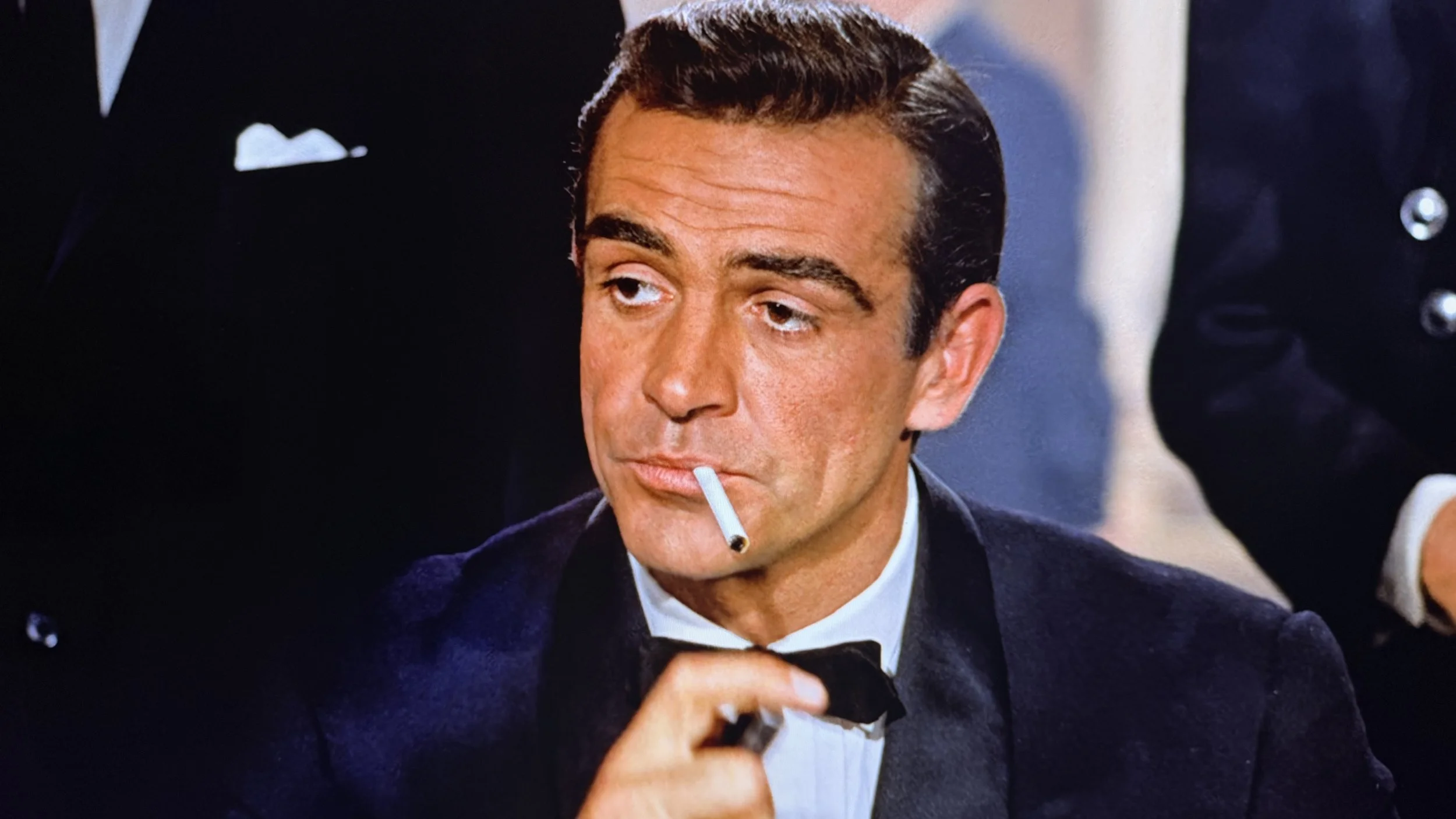
We have to spend some quality time on that first outfit because it’s arguably the most important dinner suit in film history.
The suit is midnight blue, which under artificial light can often look richer and darker than black. In my own workroom, midnight blue is usually described as the darkest navy before you get to black. In cloth books it’s often so dark you need to put it directly next to black to see that it IS navy after all.
The jacket is a one-button single-breasted dinner jacket with a generously shaped shawl collar faced in satin. Jetted pockets, no flaps, and a neat white linen pocket square in the outer breast pocket. The sleeves are finished with satin gauntlet cuffs, or turnback cuffs, each with satin-covered buttons. The trousers have a proper high rise, double forward pleats and satin braid down the outer seams.
Underneath, Bond wears a white evening shirt in cotton voile with a spread collar, pleated front, mother-of-pearl buttons and double cuffs. The bow tie is black satin, hand tied, narrow and finished with diamond points. On his feet are simple black evening shoes. Everything is elegant, but nothing is trying too hard.
That’s the real lesson.
A lot of men looking at Bond style make the mistake of thinking they need more detail, more luxury, more “statement”. Bu in reality, the power of this outfit comes from restraint. Midnight blue rather than a British navy or Royal blue. A beautifully shaped shawl lapel instead of a wide peak - Connery already has broad shoulders and they don’t need more emphasis. A proper self-tied bow tie rather than something pre-tied and lifeless. A shirt that’s interesting because of its fabric and cut, not because someone has turned it into a novelty item.
Bond’s dinner suit doesn’t beg to be noticed. It just looks perfect whenever the camera finds it.
That, for me, is one of the best lessons any man interested in bespoke tailoring can take from older James Bond films. Real elegance isn’t loud. It’s calm, proportioned and quietly assured.
The Grey Suits and What They Teach Us
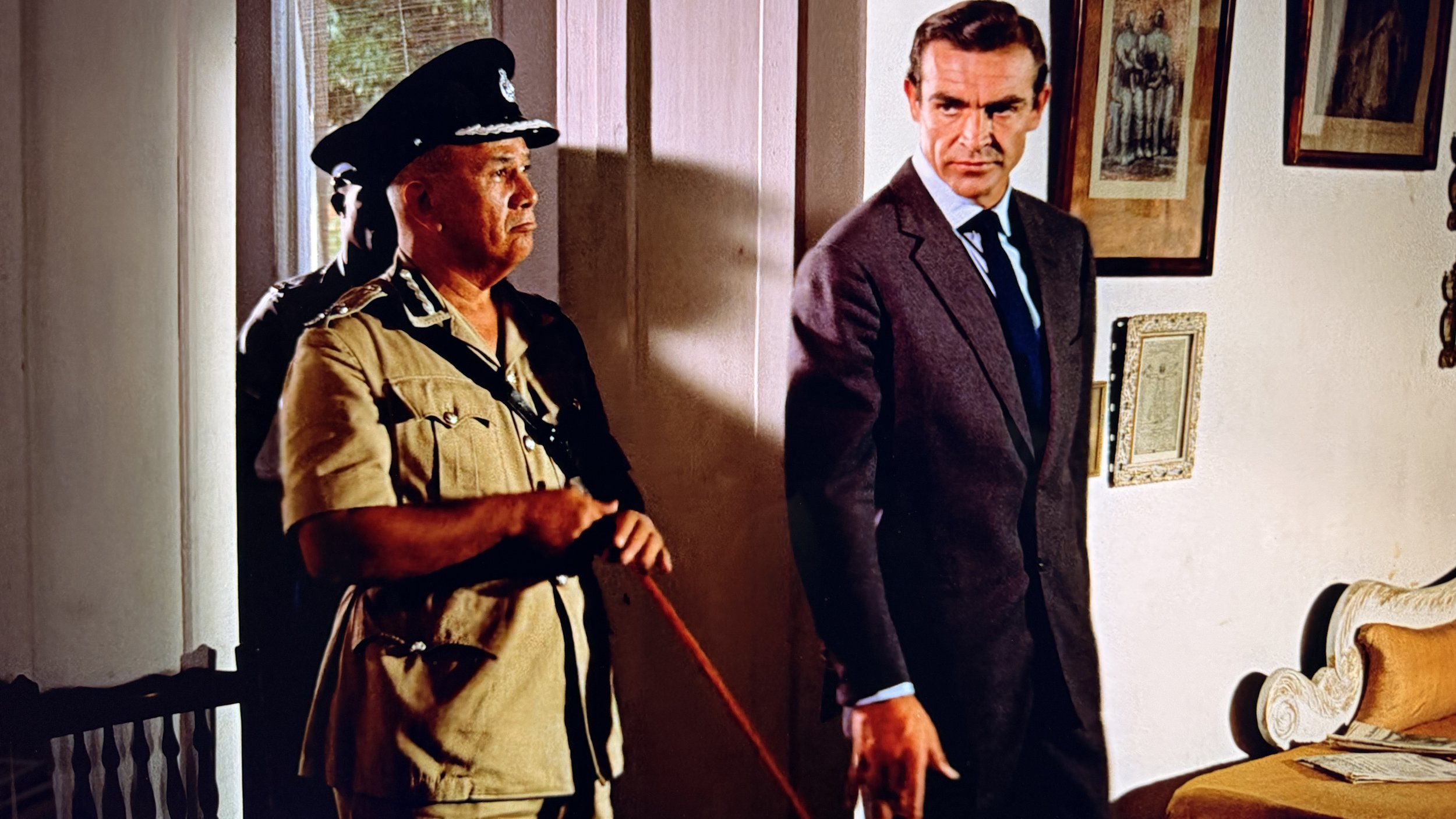
Once James Bond reaches Jamaica, Dr. No gives us several versions of his day wardrobe, and this is where the film becomes especially interesting for anyone who cares about tailoring.
He arrives in a dark grey flannel suit with a pale blue shirt, dark navy grenadine tie, white linen pocket square and black Derby shoes. It’s beautifully cut, very much in keeping with the early 1960s English silhouette, but absolutely the wrong cloth for Jamaica.
This is where my tailor brain always goes off. Flannel is wonderful, but it’s an insulating fabric. My own flannel suits don’t see the light of day until autumn. Turning up in Jamaica wearing dark grey flannel is, to put it politely, optimistic.
That may sound like a small point, but it really matters. One of the biggest mistakes men make is confusing “dressed well” with “dressed appropriately”. A beautiful suit can still be wrong for the climate, the pace of the day or the setting. Good taste isn’t just about colour and fit. It’s also about judgment.
That said, the suit still tells us something valuable. It shows us Bond’s basic London uniform - dark grey flannel was not a flamboyant choice. It was the wardrobe staple of a serious man. The audience sees Sean Connery rather than some loud bit of costume design, and that’s a very big part of the magic.
Later, the film gives him lighter grey tailoring better suited to the Caribbean, including mohair blends that hold their shape, breathe better and photograph beautifully in warm weather. Mohair is one of those fibres I always think more men should understand and give some consideration to. It gives a suit crispness, breathability and resilience while holding a level of structure, which is why it can be such a great option for a man who wants a sharper warm-weather wardrobe.
There’s also a navy blazer worn with darker trousers, and again the idea is the same. Bond is formal without looking stiff, polished without looking overdressed. That balance is much harder to achieve than people think, and it’s exactly why so many men end up seeking out bespoke tailoring in the first place. They want to look right in every room without appearing as though they’re begging for attention.
Why The Details Matter
Strip Bond’s wardrobe down to its essentials and the palette is incredibly simple. Grey suits, pale blue and white shirts. Dark navy ties, black shoes, white linen pocket squares. But it never feels dull because the interest comes from texture, cloth, proportion and a handful of small details that are well chosen.
The ties are usually grenadine, which gives them texture and depth without making them flashy. The shirts, often associated with Turnbull & Asser, have that clean, masculine clarity that works so well on Connery’s frame. The cocktail cuff is one of those details that sits perfectly in Bond’s world because most people will never notice it, but the right people will.
That’s a very different sort of style from the modern obsession with logos, branding and obvious luxury. Bond’s wardrobe works because it never feels like it’s desperate to prove anything.
This matters for modern men more than ever. Many wardrobes now are full of expensive things but lack any sort of cohesion. What Dr. No reminds us is that style is not really built on quantity - it’s built on consistency. A clear palette, good cloth and proper fit, combined with a few individual details that belong to you.
For any man thinking seriously about bespoke tailoring, that’s where the real value lies. Not in having the loudest suit in the room, but in having the suit that makes you feel completely at ease in the room.
What Modern Men Can Take From Dr. No
The wrong lesson from Bond is that you need to recreate his outfits piece by piece. That’s how admiration turns into costume, or cosplay.
The more useful lesson is to understand the principles. Wear a palette that works for you and choose cloth that makes sense for your life and climate. Keep the details refined. Prioritise fit and proportion over fashion and above all, never let the clothes look like they are wearing you.
That’s why Dr. No still matters, not just as a film, but as a reference point for classic men’s style. The dinner suit remains one of the great black tie moments in cinema. The grey suits still teach us useful lessons about classic British tailoring. And the overall wardrobe still shows what happens when expensive clothes are chosen with discipline and consideration.
If you’re a man interested in bespoke tailoring, that discipline is the thing worth paying attention to. The best wardrobe is hardly ever the most complicated one. It’s the one where every decision feels deliberate, elegant and almost simple.
That’s also why Sean Connery’s James Bond continues to resonate so loudly with successful men to this day. Whether they are dressing for business, black tie, travel or a significant occasion, what they’re usually after is not attention for attention’s sake, but quiet confidence and ease. They want to walk into a room and feel supremely confident but at the same time entirely themselves.
That’s what the best tailoring gives you.