Colin Farrell’s Sugar Style - Why John Sugar’s Suits Feel So Right
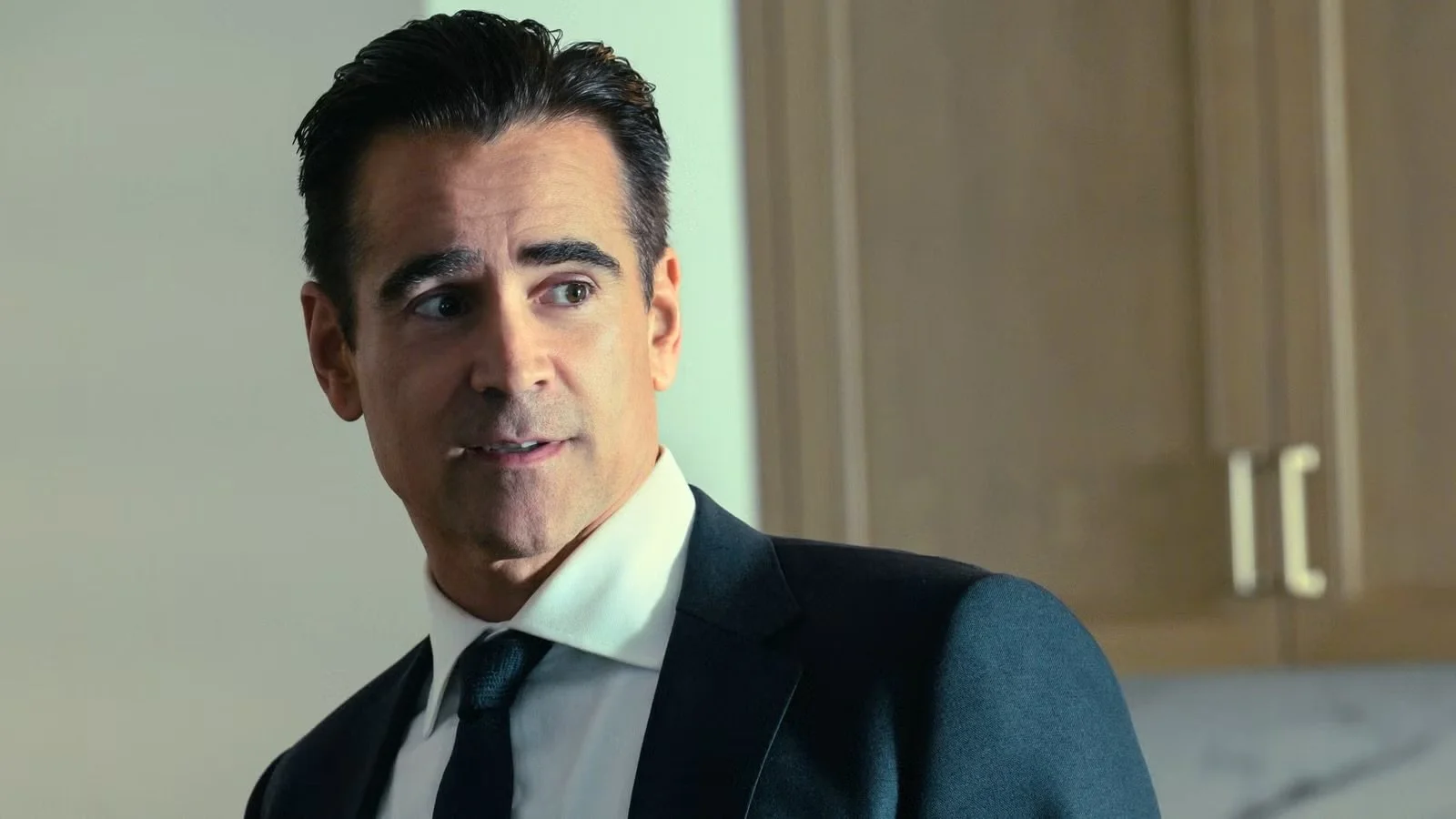
Colin Farrell as John Sugar in Apple TV’s Sugar
After having so much fun picking apart Milo Ventimiglia’s wardrobe in Netflix’s adaptation of Harlan Coben’s I Will Find You, I couldn’t resist taking a closer look at Colin Farrell’s suits in Sugar on Apple TV. I was aware of the show but hadn’t watched it till last week after a strong recommendation from my Tailoring Talk Magazine podcast co-host Jon Evans. After binge watching Season 1 over two days that show is now living rent‑free in my brain.
It’s not just the plot or (spoiler alert) the twist or the whole film‑noir thing. It’s the way John Sugar moves through Los Angeles in these deceptively simple suits that somehow feel more modern than half of what we see on red carpets and catwalks right now.
If Milo, as Hayden Payne, was a masterclass in smart casual done properly, then John Sugar is a lesson in how to wear a uniform so well it turns into a character in its own right rather than just costume. As a bespoke tailor who spends my days fitting real men for real lives, I think there’s so much we can steal from him!
Meet John Sugar : A Modern Film‑Noir Detective
John Sugar is a private investigator working in present‑day Los Angeles, but he’s living inside his own little movie. The show is intentionally built as a neo‑noir. You get black and white sequences, old movie clips cut into scenes, tilted camera angles, old Hollywood references... and right in the middle of all that cinematic language you’ve got this quiet, handsome, mysterious man in a sharp suit who cares deeply about people, only takes missing persons cases and tries very hard not to hurt anyone unless he absolutely has to.
Colin Farrell has talked about the character as someone kind and empathetic, a character wrestling with loneliness and trying to do the right thing in a city that doesn’t always reward doing the right thing. So his clothes have to do two jobs at once. They’ve got to fit the film‑noir world the show’s playing in, and they’ve got to show you he’s trustworthy. That’s where the amazing costume designer Christie Wittenborn comes in.
The John Sugar Uniform : Simple, Sharp & Deliberate
Let’s start with what we see on screen.
Most of the time, Sugar’s in a tailored, dark suit with a white dress shirt and a dark tie. It’s the kind of outfit that sounds boring when you try to describe it, but it’s anything but boring when you watch him move. It’s the sort of thing we’ve seen before in Keanu Reeves’ John Wick, or the Hitman games series’ Agent 47. But this time with more panache.
The silhouette is clean but mid‑1900s in spirit. Think more Alain Delon or Frank Sinatra than skinny‑lapel‑Instagram‑bro. The shoulders sit cleanly on his frame. There’s enough shape through the coat waist to look sharp without looking like he’s been shoe-horned into it. The trousers flow through his legs rather than twist around and strangle them.
Underneath the suits he wears crisp white shirts (a medium bodied twill if I’m not mistaken) with proper, strong semi-cutaway collars and dark ties that don’t shout. No novelty patterns, no loud bright or distinctive colours. Just dark ties that get on with the job. When the suit jacket is removed, you see the shirts are tailored, no excess parachute material here. He also wears black braces (suspenders to our American cousins), which adds to that working detective feel.
From a distance, his clothes say one thing very clearly: this is someone who takes what he does seriously, but he’s not dressing up to impress anyone. He’s dressing to get things done.
Built For A Body That Actually Moves
This is where the tailoring geek in me gets excited, because these aren’t random off‑the‑peg suits someone pulled from a rental store. Wittenborn has explained that they built all of Colin Farrell’s suits and costumes specifically for Sugar, and they built multiples for his stunt double as well. That’s a lot of suits (I’d love to work on a show or movie like this someday!), and that really shows how much thought and effort went into this.
Colin Farrell is in his late forties, he’s athletic, obviously keeps fit and he spends huge chunks of this show running, fighting, climbing and generally throwing himself (and others) around the frame. If you’ve ever tried to sprint in a bad suit you’ll know how completely unforgiving that can be. So the team had to fine‑tune the jacket armholes, sleeve pitch, seat, thigh and rise of the trousers in a way that allowed him to move like a modern leading action star while still looking like he belongs in a 1960s crime movie.
You can see it in the way the jackets break when he walks, the way the trousers stay close without grabbing onto his thighs and calves, the way his shirt never looks like doing it’s own thing underneath the suit. It’s the kind of cut you only get when someone actually understands how the body works in motion and isn’t just chasing a look for a static photo.
From Wool To Mohair - How Fabric Tells A Story
There’s another clever detail I really love. Wittenborn has talked about how she started Sugar off in more straightforward suiting fabrics and then slowly introduced mohair and other fabrics with a bit more lustre and texture as the story progresses.
If you’re not obsessed with cloth the way I am, mohair is a fibre that gives suits a slightly sharper, crisper look. It can catch the light beautifully, and it has this old‑school glamour baked into it that instantly nods to mid‑century cinema. On Sugar, it means that as his case gets more complicated, his suits subtly become a little more heightened, a little more “movie”, without him suddenly showing up in something that looks a bit over the top.
Remember, the show sometimes flips into black and white, and the cinematography leans heavily on strong contrast. Having suits that can play nicely both in colour and monochrome is crucial. That’s another reason to keep the palette simple and let the fabric textures do more of the talking. The clothes need to survive colour grading, lighting changes and those stylistic flourishes without suddenly looking completely wrong or getting totally lost.
A Home That Matches The Clothes
Costume never exists completely on it’s own. Production designer Meghan C. Rogers has talked about renovating John Sugar’s Beverly Hills bungalow with references to Casablanca and classic Hollywood interiors. His space feels like it belongs to a man who’s half way between reality and the old films he worships. It’s cosy and lived‑in, but it’s also quite cinematic.
Put that man in a clean tailored dark suit, give him a white shirt and dark tie, and all of a sudden the whole picture makes sense. He’s living inside his own private Hollywood noir, and his clothes are how he chooses to participate in it without losing himself completely. They anchor him in a city full of sunshine and chaos as someone who, despite all that, has put his foot down and decided “this is who I am and this is how I show up, every single day.”
Why This Kind Of Tailoring Feels So Modern
Now let’s get out of the fiction for a second and look at this from where you might be standing - in 2026, in a world where menswear is pulling in a dozen different directions at once.
You’ve got fast fashion throwing out suits and “smart” trousers that are more about a quick dopamine hit than long‑term wear. You’ve got celebrity stylists chasing ever more extreme lapels, patterns and cuts to get their moment on social media. You’ve got loads of guys who have just given up on smart dress altogether because all they’ve ever experienced are uncomfortable, badly fitted suits that fight against them all day.
Then along comes Sugar, and instead of trying to reinvent the wheel with wild colours or gimmicky details, it quietly says: “what if we just did a classic suit properly? What if we cut it for movement. What if we choose good fabric. And what if we use it as a uniform that frees the character from worrying about what to wear so he’s able to focus on what he actually needs to do?”
To me that’s incredibly modern. In today’s culture where we are so obsessed with novelty, Sugar’s suits are a reminder that you don’t necessarily need endless variety in your wardrobe. You need a handful of pieces that are well-made, well-fitted and true to who you are and what you do.
What You Can Steal From John Sugar’s Wardrobe
So what can you, reading this on a Monday morning before your commute or scrolling in bed on a Sunday night, actually take away from Sugar and use in your own life?
1. Pick a uniform, not a costume
John Sugar has decided his look is a dark suit, a white shirt and a dark tie. He varies the cloth, he changes the ties, he lets the silhouette breathe a little, but the basic idea stays the same. That’s a uniform, and it’s incredibly powerful.
I’m not saying you have to wear a suit every day. Your uniform might be dark jeans, a pair of chinos you love and a rotation of well‑cut shirts and knitwear. It might be tailored trousers and polo shirts. The point is to consciously pick what your “default self” looks like and then build around that instead of trying to reinvent yourself every day.
2. Buy for movement, not for the mirror
Sugar’s suits were designed so Colin Farrell could run, fight and drive in them without everything falling apart. You might be running for a train, presenting to a client, carrying kids (or in my case dogs since they seem hell bent on walking me these days rather than me walking them), or walking into an event you’d rather not be at. The principle’s the same.
When you’re trying on tailored pieces, don’t just stand in front of the mirror and admire the front view. Do what I tell my clients to do : sit down, take a few strides, run up and down a flight of stairs. Imagine the things you actually do, the movements you frequently make in a day. If the suit fights you, it’s not good tailoring, no matter how impressive the label is.
3. Let texture do more work than colour
The most effective thing in my opinion about John Sugar’s wardrobe is that it hardly uses colour at all. Dark suits - black, deep midnight, deep charcoal... white shirts and dark solid ties. Our brains are trained to think that’s bland, but on screen it just looks incredibly considered, classy and elegant because the fabrics, cut and proportions are doing all the heavy lifting.
You can bring that into your own wardrobe by choosing one or two main suit colours - navy and grey for most men, possibly black (but that can be tricky to pull off unless you go to a lot of funerals or like hanging around nightclub entrances pretending to be a bouncer) and then play with subtle textures. Flannel and soft milled wools for winter. A high‑twist wool for travel. A touch of mohair if you want that movie‑star sharpness. You don’t necessarily need loud checks for people to notice you. You just need the right fabric and the right cut.
4. Dress to be trusted, not just noticed
Sugar spends his time with powerful Hollywood figures, frightened families and dangerous people who might want to hurt him at any moment. His clothes help him move between those worlds as someone who seems competent and reliable, not flashy or desperate to be seen.
In the real world, if you’re a lawyer, consultant, creative director, business owner, or really just anyone who needs people to feel comfortable putting money, secrets or responsibility in your hands, that’s priceless. The lapel width, shoulder treatment, the way your shirt collar sits, your choice of tie - all of it adds up to a quiet statement about whether you’re there to serve or to show off.
5. Stop buying disposable tailoring
The suits in Sugar might have lots of duplicates for stunts, but they’re still built to last. They’re put through a lot during filming and expected to come out the other side as much as possible in one piece. That’s the mindset we’ve largely lost with fast‑fashion tailoring. We’ve convinced ourselves that buying cheap suits often is better than buying good suits rarely. It isn’t.
If you’ve read my piece on Zara trousers you’ll know how quickly bad fabric and bad construction can let you down once you actually live in a garment instead of just standing in the fitting room for a few seconds. Sugar’s wardrobe is the opposite. It’s validation for spending more time and more care up front so you spend less time worrying later.
Why This Is About More Than Just “Nice Suits On The Telly”
It’d be so easy to treat this as pure escapism. Wonderful show, great actor, cool suits and move on. But I honestly think Sugar is tapping into something culturally quite important.
We’re living through a period where identity feels fragmented. Social media distracts, interrupts, unsettles and encourages us to reinvent ourselves constantly. Clothes are cheap and disposable. Trends change faster than any of us can keep track of. In the middle of all that, the idea of a man who quietly chooses a timeless uniform that fits his values and just keeps showing up in it is almost revolutionary.
John Sugar’s suits tell you he’s made a decision about who he wants to be, how he wants to show up to the world and how he wants to treat people. They’re designed to let him move, keep him comfortable but to also signal respect in every single room or situation he walks into. That’s not just him having “good style”. That’s a whole way of living.
If you take one thing from this show, let it be this: you don’t need to dress like a movie star to feel like the main character in your own life. You just need to care as much about fit, fabric and consistency as the Sugar team clearly did, and choose clothes that help you do the things you actually care about, and create your desired impression and impact with the people you meet.
If you enjoyed this, you might also like my breakdown of Milo Ventimiglia’s wardrobe in I Will Find You.
If you’ve been inspired by Colin Farrell’s style as John Sugar, book a consultation with Roberto