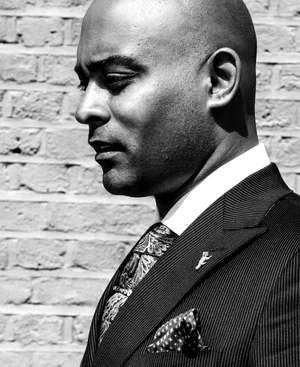
How To Style A Blazer For Everyday Wear
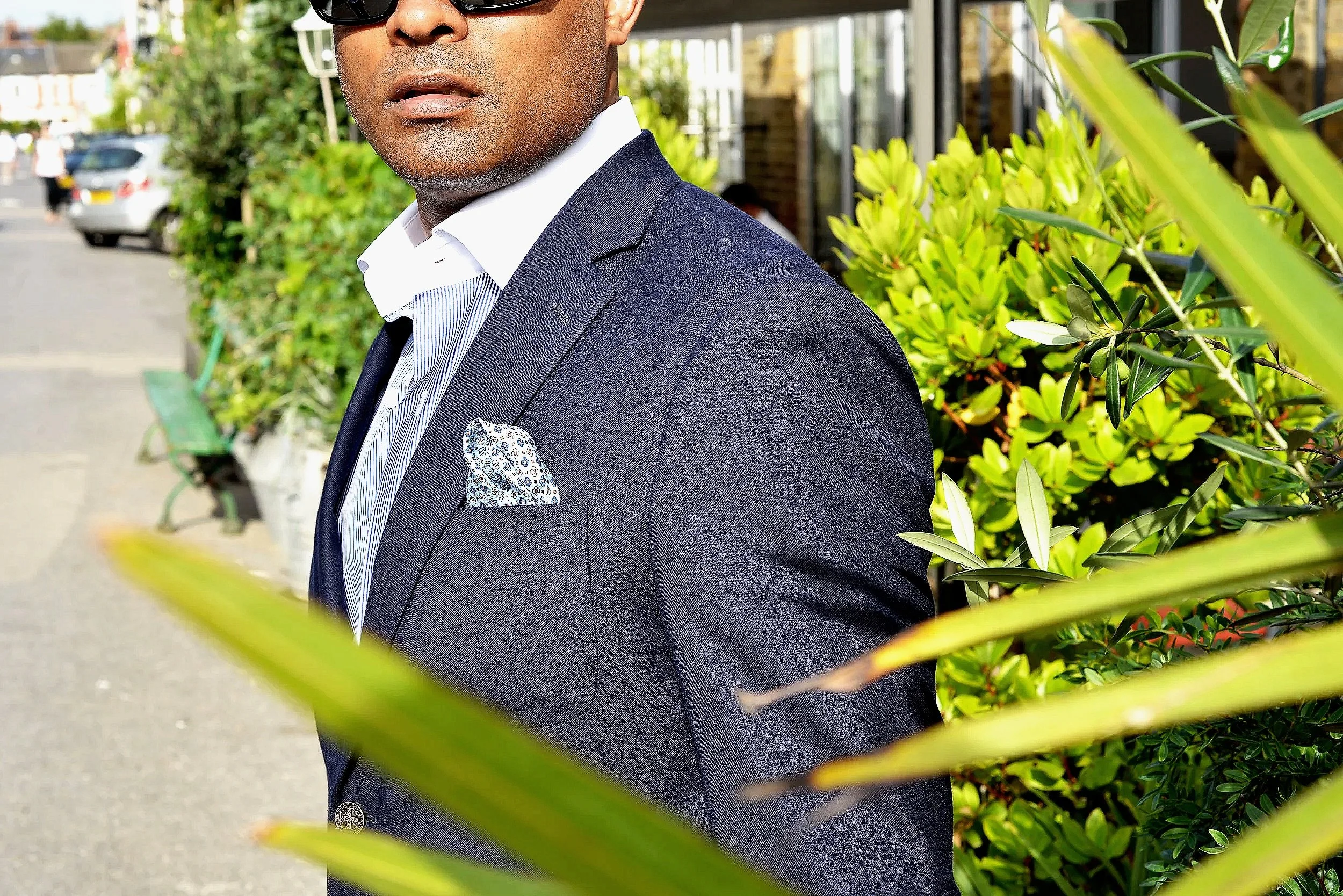
This is one of those things that sounds simple until you actually start looking at what men are wearing in the wild, and then you realise very quickly that a lot of people haven’t got a clue.
The worst offenders for me are the men who take a suit jacket, re-appropriate it as a blazer and think they can get away with it. Unless the suit was tailored and the fabric selected with that purpose in mind from the outset, it just looks like you took one of your suit jackets and tried to use it as a blazer, which immediately tells anyone who knows how to dress that you haven’t really understood what you’re doing. It’s one of those things that people think is a clever shortcut, but it usually has the opposite effect.
Then you get fabric mismatching, which is another common one. A linen jacket with flannel trousers would be an extreme example, but I have genuinely seen that happen. Summer jacket fabrics need to work with summer trouser fabrics, winter with winter, and the textures need to complement one another rather than clash. Colour is another issue, because most men simply do not know how to put things together. And then of course there’s the evergreen problem, fit, because smart casual dressing leaves no place to hide. If it fits wrong, it looks cheap. End of story.
That’s why I think so many men struggle with blazers. Not because they don’t like the idea of them, but because when a blazer is done badly it can look awkward, try-hard, vaguely old-fashioned, or just plain wrong. So they back away from it altogether and end up stuck in that no man’s land between “too suited” and “too casual”, which is exactly where a lot of successful men lose ground in their wardrobe.
And that’s a shame, because when a blazer is done properly it is one of the best garments a man can own.
When I fit my own clients in a new blazer or smart casual jacket, of course they always look perfect, and I always joke with them that if they keep their mouth shut they could pass for a successful, dashing, debonaire Mediterranean gentleman. That’s always the aim with smart casual dressing really. You want to look like the clichéd well-dressed European gent from Italy or Spain. Or even like me, which is obviously the gold standard, wink wink.
But jokes aside, that really is the point.
A man in a good blazer should look and feel every bit as competent and confident as he would in a perfectly tailored suit. None of the impact, impression or aura should be lost just because he is “dressed down”. It should all still be there, just expressed in a different way. He should look like he knows how to dress, and always has done. Like he knows and respects the rules of dressing well without looking stiff or overdone.
That’s the sweet spot.
So what actually makes a blazer work for everyday wear?
Firstly, it needs to be a proper casual or smart casual jacket, not just half a suit. In terms of fit, compared to how a suit jacket would normally fit, the everyday blazer should be effortlessly comfortable and move with you one hundred percent. You should feel it on, in the sense that it moves with you and works with your day, but you should not feel restricted by it. I prefer softer shoulders, lightweight canvassing, and a slightly shorter length, on average about three eighths of an inch shorter than a suit jacket would normally be cut. I also like it to be a touch more relaxed through the armholes and the waist, partly for ease and comfort and partly because it gives you more room for layering when you need it.
Fabric is a huge part of it as well.
I personally prefer textured fabrics because I do not like those fine single-direction weaves for everyday jackets. They feel too suity, too polished in the wrong way, too much as though the jacket belongs with matching trousers that you’ve left at home. Open weaves like hopsacks and basketweaves are excellent, and textured cloths like linen, wool-linen, wool-cotton or cotton-linen blends are brilliant for spring and summer. In the colder months, tweeds, flannels, milled wools, donegals, and even corduroys or moleskins for the right personality can all make superb casual jackets.
Colour-wise, anything goes really, but only in the sense that it has to go on the right person.
It always depends on the complexion and natural colouring of the wearer, but a navy blazer, or better still a textured navy jacket, is the foundation of any man’s smart casual wardrobe. From there you can build out by adding colours that work for the individual and for the season. Burgundy is very versatile. Green is very versatile. Earth tones can be fantastic as well, but again it depends whether the wearer needs warmer earth tones with more yellow in them or cooler earth tones like taupes, which are greyer and a bit more muted. Grey can be trickier. It can work, of course, but it’s not the happiest or most relaxed colour and often only really comes into its own with black, navy or darker grey trousers, sometimes a deep green depending on the shade.
This is why dressing well is never really about isolated garments. It’s about combinations.
That, psychologically, is where a lot of men get smart casual dressing wrong. The biggest thing for most men is that they just. don’t. know. Or at least they think they don’t. They’re worried about getting it wrong, or they simply have no idea where to start. So what they do is buy smart casual items in isolation. They see a jacket they like, or they know or think they need a certain type of jacket, so they buy it, take it home, and then suddenly realise they have no idea what to wear it with.
That is such a common mistake.
A smart casual jacket should be bought as part of a full outfit. One jacket, two different trousers, a couple of different shirts, maybe a knit or two, so that it goes into the wardrobe and immediately you have options. You don’t buy a suit as an incomplete outfit, so why would you treat a blazer any differently? The only real exception is if you are working with a wardrobe professional or bespoke tailor, someone like me, who is helping you build a wardrobe over time on a regular basis and is constantly thinking about these things for you so that you do not have to.
That’s the proper way to do it.
If we’re talking about actual combinations I like, then it really comes down to season and mood. For autumn and winter I love tweed as a jacket fabric, paired with flannel trousers, a quarter zip, roll neck or brushed cotton shirt and a waxed suede chukka boot. That sort of combination feels masculine, relaxed, textured and grown up, and it works brilliantly for everyday life. In spring and summer, linen or linen blends would always be among my favourite options, paired with trousers of a similar fabric composition or with a smart cotton chino, and then on the feet either a derby lace-up or a monk strap because both are so versatile and keep the outfit grounded in something refined.
And that is really what everyday blazer dressing should do. It should make you look put together without looking formal. It should make you look like a man who knows exactly how he wants to present himself, even when he is supposedly dressed down.
If a man came to me and said he wanted one blazer he could wear all the time, I would say that it’s tricky, but not impossible. You need something versatile enough to work across the year, to be dressed up and down, and to look different depending on the shirts, trousers and colours around it. It needs to be a picture frame that does not detract from the changing pictures within it. So instinctively I would be steering him towards a slightly open weave dark blue jacket with texture, perhaps with a very subtle plaid running through it, in something like a wool-cotton mix. The wool gives structure and resilience, the cotton gives texture, softness and a bit of give. That is a very good place to start.
But I would also tell him that his goals need to be a bit higher, because a proper smart casual wardrobe should be prepared for every season of the year.
That is really the answer to this whole question.
How do you style a blazer for everyday wear?
You don’t just throw one on and hope for the best. You choose the right kind of blazer in the first place, you make sure the fit is soft and comfortable rather than stiff and suity, you work with textures and colours that make sense, and above all you buy and wear it as part of a complete outfit rather than as an isolated piece.
Done properly, an everyday blazer should not make you look as though you’ve made a huge effort. It should make you look as though you always know what you’re doing.
And that is a very different thing.